
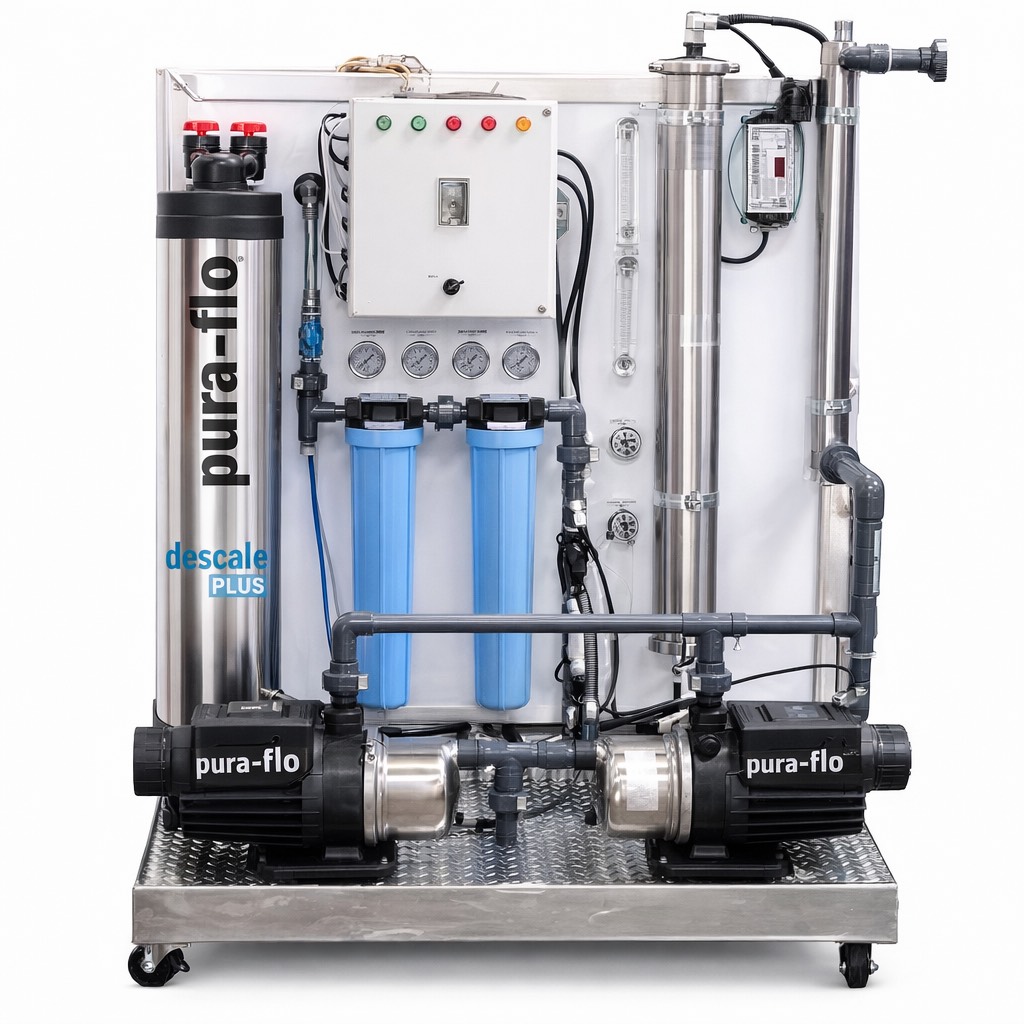
Water quality concerns have evolved. Today’s homeowners are thinking beyond chlorine and sediment — Asking deeper questions about dissolved solids, heavy metals, PFAS (“forever chemicals”), microplastics, and emerging contaminants.
Whole-house reverse osmosis (RO) systems provide comprehensive water purification at the point of entry, treating water before it reaches any fixture in the home.
This is advanced whole-home protection — not just filtered drinking water.
What Is a Whole-House RO System?
A whole-house reverse osmosis system is installed at the main water line entering the home. Unlike under-sink systems that treat only drinking water, these systems purify all incoming water used for:
- Showers and baths
- Laundry
- Cooking
- Ice makers
- Appliances
- Outdoor use (optional configurations)
Water is processed through multiple pre-filtration stages and then forced through a semi-permeable RO membrane designed to remove dissolved contaminants at a molecular level.
Addressing Emerging Contaminants
Modern water quality concerns extend beyond traditional filtration targets.
PFAS (“Forever Chemicals”)
Per- and polyfluoroalkyl substances (PFAS) are synthetic compounds used in manufacturing and consumer products. They are persistent in the environment and resistant to breakdown.
Reverse osmosis membranes have been shown in independent testing to significantly reduce many PFAS compounds.
Microplastics & Nanoplastics
Microplastics are small plastic particles increasingly detected in surface and municipal water supplies. Nanoplastics are even smaller particles that require advanced filtration to remove.
Because reverse osmosis operates at a molecular filtration scale, it is one of the most effective residential treatment technologies available for reducing microscopic particulate contaminants.
Dissolved Solids & Heavy Metals
Whole-house RO systems reduce:
- Total dissolved solids (TDS)
- Lead
- Arsenic
- Chromium
- Nitrates
- Fluoride (in many configurations)
- Excess minerals contributing to scale buildup
Benefits of Whole-House Reverse Osmosis
- Comprehensive contaminant reduction at every tap
- Improved taste and odor throughout the home
- Reduced scaling in plumbing fixtures and appliances
- Softer-feeling water without traditional salt-based softeners
- Protection from emerging contaminants
- Long-term investment in plumbing system longevity
System Design & Components
A properly engineered whole-house RO system typically includes:
- Multi-stage sediment and carbon pre-filtration
- High-capacity RO membrane housings
- Storage tank and re-pressurization system
- Post-treatment mineral balancing (optional)
- Integrated monitoring and control panel
System sizing depends on:
- Household water demand
- Incoming water quality
- Pressure availability
- Drain capacity
Professional water testing is recommended prior to system selection.
Important Considerations
Whole-house RO systems:
- Require adequate installation space
- Produce reject water (concentrate) as part of the purification process
- May require remineralization depending on local water chemistry
- Should be installed and maintained by qualified professionals
Because these systems treat all water entering the home, proper engineering and installation are critical for performance and efficiency.
Is Whole-House RO Right for You?
Whole-house reverse osmosis is ideal for homeowners who:
- Have high TDS levels
- Are concerned about PFAS or emerging contaminants
- Want advanced protection beyond carbon filtration
- Use well water with complex mineral content
- Prefer maximum water purity at every fixture
For many households, it represents the most comprehensive residential water treatment option available.